Slow Replies Should Be Normalized, and Here’s Why
 Nikolay KononovEditor at Kineto Mag
Mar 19, 2026
If unanswered DMs have been haunting you for days, it’s time to let that go.
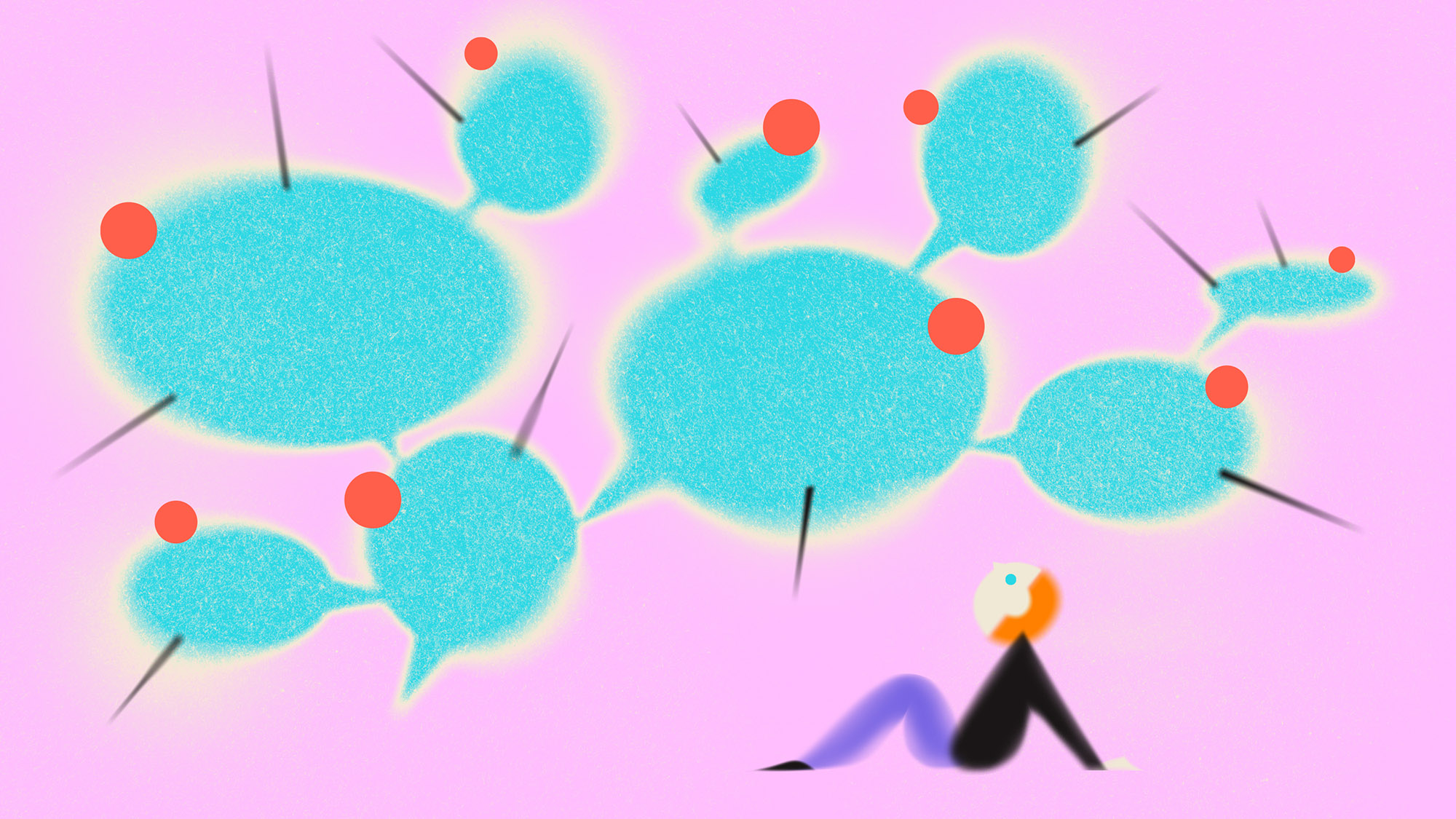
In most relationships we're expected to reply to messages pretty much immediately. Respond quickly, and you’re considerate. Take your time, and you risk being seen as rude or disengaged. For creators this expectation turns into constant pressure. When your work depends on social platforms, ever changing algorithms, and always-on visibility, the demand to be instantly available can become overwhelming.
The truth is, very few messages actually require an immediate response. The sense of urgency is often based in social norms and in the expectations we place on ourselves. Kineto Mag breaks down why it’s time to leave the culture of instant replies behind.
Slow is a strategy
The slow movement emerged in the the 80’s as a response to the increasingly frantic pace of life driven by tech. But it was never just about doing things more slowly. At its core, it’s about creating space for reflection, focus, and depth. Over time, the movement has been embraced by people across professions — scientists, journalists, chefs, designers, and even gamers. What they all ask for is the same: the freedom to step out of the constant race and do their work with intention.
At first glance, a creator’s life seems to revolve around speed, productivity, and fast reactions. But that doesn’t mean there’s no room for boundaries or mindfulness. Instead of stressing over messages sitting unanswered in your DMs for days, try turning that pause into a principle. A slower response gives you time to think through what’s being asked, notice your emotional reaction, and decide how (or whether) you want to engage. The pause becomes a conscious choice, not a failure to keep up.
Constant pings, broken focus
It’s no secret that social media affects our brains. It pulls us into dopamine loops, makes us more impatient, and chips away at our ability to concentrate. What we often forget is that this isn’t just about likes and short-form videos — constant messaging plays a role too. Work emails or “important” DMs feel like a legitimate reason to grab your phone or open your laptop. But neurologically, the mechanism is the same: a hit to the brain’s reward system.
The pause becomes a conscious choice, not a failure to keep up.
Since creators can’t realistically opt out of social media altogether, the goal isn’t avoidance — it’s mitigation. Mental health expert Dr. Gregory Jantz suggests introducing small, intentional breaks: leave your phone in the car when you go to the movies, or gradually increase the time between checks.
If you’re used to looking at your phone every 15 minutes, try stretching that to once an hour. See if batch responding is something that works for you. Attend to your messages on dedicated days or hours, or set yourself a limit: I’ll respond to three messages today — the rest can wait until next week.
It’s nomophobic
Ever felt a spike of anxiety when your internet cuts out or your phone battery dies? Objectively, it’s rarely a serious problem. Yet the emotional reaction can be intense. This experience even has a name: nomophobia, the fear of being without your mobile phone.
According to a 2025 meta-analysis, symptoms of nomophobia may affect up to 94% of the population. When you keep your phone within arm’s reach at all times “just in case something important comes in,” that behavior can quietly turn into a habit, and then into a source of chronic anxiety.
Rather than waiting until this pattern escalates to the point of needing professional help, it’s worth addressing it early. Start noticing your triggers. Try small changes, like leaving your phone in another room while you sleep. It’s also important to invest in face-to-face connections.
It's easy to see how nomophobia could go hand in hand with loneliness, and real-world interactions can help counter that. Slower replies aren’t just about boundaries, but about reclaiming a sense of safety that doesn’t depend on being constantly reachable.
The illusion of availability
Status dots, read receipts, typing indicators — messengers have come up with countless ways to show that someone is aware of your attempt to reach them. While these features were introduced to ease anxiety and reduce uncertainty, in practice they’ve become tools for keeping us tethered to our phones. There’s no way to opt out of this system entirely. The only real solution is to protect yourself.
OpenAI’s Chief Revenue Officer Denise Dresser — who until recently was the CEO of Slack — has spoken openly about the importance of setting boundaries. “I do notice that when I set the tone and I don’t respond to somebody on the weekend, they feel, I think, a little bit more empowered. They understand that I respect their weekend, [that] I’m also going to spend time with my family,” Dresser told journalists. Boundaries don’t just protect you, they quietly give others permission to set their own.
If it can wait, let it wait
Organizational psychologist Adam Grant argues that we need to rethink response culture completely. The first step, he says, is to stop confusing speed with courtesy. “Apologizing for slow replies is a symptom of unrealistic demands in an always-on culture. How quickly people answer you is rarely a sign of how much they care about you. It’s usually a reflection of how much they have on their plate,” Grant writes.
Boundaries don’t just protect you, they quietly give others permission to set their own.
Grant argues that prioritizing fast responses can actively undermine progress. Constant interruptions make it nearly impossible to focus deeply or do meaningful work, especially creative work.
Breaking this cycle means adjusting expectations on both sides. Stop demanding instant replies from others, and stop expecting them from yourself. Grant even suggests explicitly saying that you don’t expect a quick response or refusing to accept apologies for delayed replies — as a way to gently dismantle these unspoken norms.
Your brain loves closure
Have you ever noticed how a message that would take 2 minutes to answer can sit in your head for days? That’s the Zeigarnik effect: our brain’s tendency to fixate on unfinished tasks. Unresolved goals stay mentally “active,” pulling attention away from whatever you’re actually trying to do. Unanswered messages work the same way: even if you’ve consciously decided not to reply right now, your brain still treats it as something pending.
For a long time, psychologists believed the only way to stop this mental noise was to complete the task. But studies show that simply making a clear plan for an unfinished task is often enough to quiet the mind. Once a plan exists, the brain treats the task as resolved. Cognitive tension drops, intrusive thoughts fade, and resources are freed up for other things.
So instead of replying immediately just to get it off your mind, try to decide when you’ll respond. “I’ll answer on Friday.” Hey, you could even add that to your calendar if you’re worried you might forget about it. That small commitment can give you the same psychological relief without sacrificing your focus or boundaries.
In 2026, authenticity wins
Rolling your eyes while replying to messages during dinner with friends, or while sitting in a movie theater with your family, isn’t authenticity. And, truthfully, no one really needs that kind of availability anymore. For instant replies, there’s AI.
According to Instagram СЕО Adam Mosseri, as AI becomes more widespread, creators’ real competitive advantage will be honesty. “Authenticity is fast becoming a scarce resource, which will in turn drive more demand for creator content, not less. The creators who succeed will be those who figure out how to maintain their authenticity whether or not they adopt new technologies.”
Slower replies aren’t just about boundaries, but about reclaiming a sense of safety.
The uncomfortable truth is that most of us are exhausted. We’re tiptoeing around burnout, battling FOMO, counting likes, and relying on social media — all while feeling guilty for not wanting to respond. Could it be our sign to stop? As Mosseri puts it, “In a world where everything can be perfected, imperfection becomes a signal.”
Breaking free from dopamine-driven urgency also means stepping away from relationships where constant availability is treated as an obligation. Delayed responses don’t require justification. Normalizing slower comms helps protect focus, energy, and creative capacity.
At the same time, boundaries shouldn’t turn into disappearance. In personal relationships, showing up still matters. Community and mutual support remain essential, as we’ve already explored in our piece on burnout.
Slow replies aren’t about withdrawing. They’re about choosing presence over pressure and connection over constant responsiveness.
Nikolay KononovEditor at Kineto MagMar 19, 2026